

Marketing has changed the pace of many businesses. Those who have cracked it have become unicorns, and those who haven’t are struggling to make ends meet. Marketing requires meticulous planning and execution. What it demands more of is evaluating different digital marketing metrics and key performance indicators to assess whether the plan is working.
The after-effect of the plan is what most companies miss. There are a number of digital marketing metrics and KPIs that CEOs can focus on to determine what is working for them. The top ten metrics that every CEO should be cautious about are listed in this section. We have also strived to provide a brief explanation of each metric’s significance for the executive suite and examples of how big businesses use comparable metrics to guide their strategy, overall digital marketing, and business expansion.
1. Customer Acquisition Cost (CAC)
What it is:
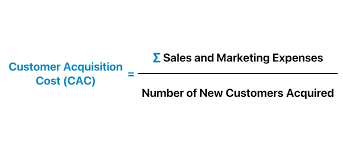
Many CEOs prefer to call it Customer Acquisition Cost, but they look at it in simpler words
“What are we spending to acquire one customer?”
This includes everything you spent to acquire that customer, so ad spend, agency fees, sales team time, and any discounts you offered.
If you see this number trend upward every quarter, that’s an indication that growth is becoming expensive and inefficient.
A financially sound business will have consistent and ideally lower customer acquisition costs over time.
2. Customer Lifetime Value (CLV / LTV)
Definition: The total profit a company anticipates from a client throughout their entire association.
Importance: CLV transforms single transactions into long-term value assessments and establishes the upper limit for acceptable CAC within a sustainable business growth strategy.
How to utilize it: Apply CLV to establish acquisition budgets, emphasize retention strategies, and determine the spending on a new customer.
Spotify openly highlights lifetime value modeling as a means to determine which content fosters enduring retention and subscription profitability. CEOs rely on LTV to manage marketing expenses and product funding as part of their digital marketing strategy.
3. Return on Marketing Investment (ROMI) / Return on Ad Spend (ROAS)
What it is: Income produced for each pound invested in marketing, also referred to as marketing ROI.
Importance: Marketing ROI serves as the most straightforward financial evidence of marketing’s impact on revenue.
How to implement: Monitor ROMI first by campaign and then by channel.
Retail leaders transitioning to direct-to-consumer strategies, like Nike, carefully analyze digital ROAS to guide spending on apps and DTC platforms. Robust digital marketing ROI has been a key factor in recent growth there.
4. Conversion Rate (and Funnel Conversion Metrics)
Definition: The proportion of users who accomplish a specified action (buying, signing up for a trial, filling out a lead form).
Why it’s essential: Conversion rates show if the quality of traffic and user experience match the business objectives and support conversion rate optimization.
Method of utilization: Assess conversion by category (channel, device, landing page). Minor enhancements in this area multiply significantly when applied broadly through structured conversion rate optimization initiatives.
5. Lead Quality / Marketing Qualified Leads (MQLs)
What it is: Prospects that satisfy established standards, suggesting they are probable to become paying clients, forming part of core lead generation metrics.
Importance: Relying solely on volume is deceptive — large volumes of low-quality leads squander sales efforts and increase CAC.
Usage instructions: Align lead scoring with sales, track subsequent conversion and attrition, and incentivize marketing for MQL-to-customer results using reliable lead generation metrics.
6. Tag Revenue by Channel
What it implies- Income associated with each digital channel (affiliates, social media, paid search, organic search, and email).
Why is it Important: When assessing digital marketing metrics and KPIs, CEOs need to know which channels bring in the tangible money after conversion, not just traffic or digital imprints.
How to utilize it: Assign a budget to platforms that generate greater marginal revenue and experiment with new channels through small trials.
Amazon’s unwavering emphasis on attribution and channel effectiveness enables it to distribute investments among search, affiliate, and proprietary channels to optimize ROI and overall marketing ROI.
7. Customer Retention Rate / Churn
What it represents: The proportion of clients who keep purchasing or stay subscribed over a period.
Why it’s significant: Retention costs less than acquisition and greatly influences CLV. Elevated churn weakens even the most effective acquisition strategies within a business growth strategy.
Method of use: Monitor cohort churn, determine reasons (product, pricing, user experience), and connect retention KPIs to management’s performance using strong key performance indicators.
8. CPL & Sales Cycle Length
Definition: CPL represents a marketing firm’s cost to generate a lead, while Sales Cycle Length allows tracking of time elapsed from a lead to a sale.
Why does it matter: These metrics help understand the cash flow impact of both measurements on a company’s capacity planning process and its wider digital marketing strategy.
Actionable Insights: Reduce your CPL by improving targeting accuracy; reduce your sales cycle length by implementing process automation alongside improved lead nurturing.
9. How is Your Brand being Searched?
Definition- This measures how many people have searched for your company by name and how competitive you were with your competitors’ visibility. The number of people searching for you by name is an indicator of your brand’s success or failure.
Indicator- If there is a growing number of people searching by name, you must be generating some level of trust and the marketing you are doing is working to create a long-term relationship rather than just a short-term promotion. Brand trust makes it easier for businesses to sell to potential customers, and the upfront marketing cost for acquiring new customers will be lower due to the familiarity of the business prior to any advertisement.
Example- Starbucks has a great example. Through a commitment to digital customer engagement and loyalty, Starbucks increased customer return visits, customer spend, customer lifetime value and total marketing effectiveness.
10. Conversion Suggesting Metrics
What it means: Indicators such as Time on Site, Pages per Session, and Email Open Rates are behaviors that users exhibit to indicate whether your content and funnels are working well.
Why it matters: Engagement is like an early alert system. If users are negligibly engaged, it usually indicates that conversions and loyalty may drop in the near future.
How to use this information: Employ heat maps, operate A/B tests, and conduct cohort analysis to see where in the user experience users are getting frustrated, and optimize funnels using conversion rate optimization.
Quick Checklist – Are You Measuring What Matters?
There is a lot of information available in the digital marketing world. Still, almost none of it is helpful for people in leadership positions within a company unless translated into meaningful digital marketing metrics and key performance indicators.
- Do you know your Customer Acquisition Cost (CAC)?
You must understand the cost of acquiring a new customer.
- Is your CLV higher than your customer acquisition cost?
If the CLV is lower than the CAC, you may have a problem with your business model for growth.
- Do you map revenues by channel?
This is to ensure that your marketing ROI is visible and measurable on different channels. Close down the ones that are not generating revenue.
4. Have you been tracking your Return on Marketing Investment (ROMI)?
Ensure that every pound is increasing in its value.
5. Have you tracked customer retention and churn rates?
Loyal customers generate higher profitability.
6. Are lead generation metrics focused on quality rather than quantity?
High-quality leads reduce wasted marketing spend.
- Do you understand how well your company converts leads into revenue?
This supports structured conversion rate optimization.
- Are the brand signals of your company improving?
Brand search and share of voice are vital key performance indicators.
- Does your data help you make sound business-related decisions?
Poor data leads to poor choices.
- Does marketing align with finance on growth metrics?
These should support the wider digital marketing strategy and business growth strategy.
If you can answer “yes” to most of these, your programmes are functioning as an actual growth engine.
Conclusion
Alright, to wrap things up, CEOs really need to zero in on the digital marketing metrics that genuinely show how the business is doing. This way, they won’t get bogged down by numbers that just look good on the surface. By keeping an eye on how these key performance indicators actually affect the bottom line and making sure their marketing team reports on things like revenue, profits, and long-term value, leaders can feel more confident and make smarter decisions.
When marketers operate and are held to the same standard as a finance or operations department, the marketing function will no longer operate as an assortment of unrelated functions but will instead serve as a fundamental driver of growth for an organization. As a result of this transformation, accountability improves, strategy becomes stronger, and marketing ROI becomes both visible and consistently achieved.
Contact Us Today