
Search engines aren’t acting like search engines anymore. This might seem like an exaggeration, but that’s precisely what’s going on.
For years, companies have had just one objective: appearing at the top of Google’s rankings. If your website showed up in the first page of results, you could expect to see traffic, leads, and customers. It was simple — all you needed was to do keyword optimisation, get links, post blogs, and win the clicks game.
But by 2026, things will be different for users. People have transitioned away from simply searching online for terms such as “best CRM software”, to now utilising A.I. tools and asking questions such as “which CRM is the best for a small sales team with remote employees?”
Instead of spending time going through multiple websites looking for tax advice people now ask:
“What is the easiest way to file my crypto taxes if I use more than one wallet?”
Furthermore, whereas users used to compare ten service providers manually, they can now receive a summary of recommendations derived from multiple providers almost instantly from an A.I. platform, thus transforming how businesses gain visibility on the web.
As a result, businesses are no longer just competing against each other on SERPs (search engine results pages), but also competing with one another to be included in A.I. generated responses. This is where Generative Engine Optimization, or GEO, becomes favourable as businesses rethink their Digital Marketing approach for AI-driven discovery.
What is Generative Engine Optimization (GEO)?
To put it differently, GEO makes your brand pop up in AI responses. While earlier search engines were showing results in a form of webpage list, today’s advanced AI software creates a response based on data from several sources.
The goal of ChatGPT, Google AI Overviews, Gemini, Claude, and Perplexity is not to keep people scrolling but to deliver an answer.
It means a lot to businesses. For many brands, Generative Engine Optimization for your business is quickly becoming as important as traditional SEO.
Consider when someone poses the question:
“What are the top energy-saving solutions for hotel operators in the UK?”
An AI-powered system will give a complete answer almost instantly, but it might include just a handful of names.
Generative Engine Optimization, also referred to as GEO, is the optimization of your content for AI-powered search engines to be able to understand, believe, and include your company when answering.
Those mentioned will get immediate exposure.
Those not mentioned might never get found.
This is why GEO is rapidly emerging as one of the most crucial digital marketing strategies for 2026.
It focuses on helping AI systems recognize:
- expertise,
- authority,
- contextual relevance,
- credibility,
- and trustworthiness.
Thus, in reality Generative Engine Optimization is not replacing SEO but expanding its use.
How GEO is Different from Traditional SEO
Traditional SEO and GEO are highly interconnected, yet their goals differ. SEO involves optimizing rankings on search engines, while GEO is aimed at optimizing visibility on AI-generated answers.
This is important since AI assesses content differently than search engines do. Before, companies could get decent rankings through extensive keyword optimization.
Here is how a construction company might have focused its keywords:
- “bathroom remodeling contractor”
- “luxury kitchen renovation company”
- “best home renovation services near me”
Keywords are important, but GEO search platforms and AI search engines have a new focus — comprehension. They look for whether the content satisfies user queries.
For instance, let’s consider two blogs that talk about how to make business HVAC systems more efficient. While one blog keeps repeating the term “lower your energy bills,” it does not have any real information. However, the other blog states:
- how commercial electricity pricing works,
- why older HVAC systems consume more power,
- what building owners can do to improve efficiency,
- and how hotels can reduce operational costs during peak seasons.
The second article is much more valuable than the first. This content is also more likely to be referenced by AI systems. GEO appreciates that businesses show their expertise in a clear and consistent manner, rather than simply optimizing for search crawlers.
This is also why AI SEO strategies are evolving beyond simple keyword optimization.
The Importance of GEO in 2026: Why It’s More Relevant Than Ever
Artificial intelligence is revolutionizing how people find businesses through searches. But more importantly, it is changing how decisions are made. The new generation of customers is increasingly looking at AI tools that make research easier.
Instead of having to open several tabs and compare websites, people now demand quick responses from AI search platforms. This trend is making way for what marketers refer to as “zero-click searches.”
As per zero-click search paths, answers are provided immediately without the need to visit other sites. In such circumstances, businesses can no longer depend solely on organic ranking techniques. Being present in GEO search results becomes equally essential as being listed in Google.
For instance, when someone asks:
“What crypto tax software allows for multiple wallet tracking?”
or
“What are some great project management applications for remote work?”
AI-powered platforms might suggest just a few possible answers. The companies picked by the AI instantly become credible. All other brands disappear from the conversation. This dynamic is particularly significant for sectors that thrive on credibility and expertise.
That includes:
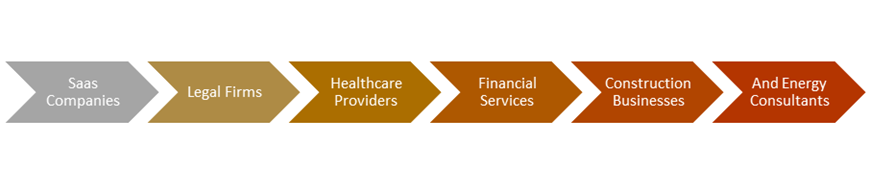
With recommendations generated through Artificial Intelligence more often being perceived by consumers to be personalized, filtered and efficient, trust in AI-generated recommendations continues to rise.
Businesses that demonstrate a strong authority signal today will have a significant competitive advantage as the growth of AI fuelled discovery continues to grow. For many companies, this shift is already influencing their wider Digital Marketing and content investment decisions.
How Do We Create Content That is GEO Friendly?
Many people mistakenly believe that developing GEO content is very technical, however, GEO strategies are most often based on creating real value.
AI systems prefer information that is:
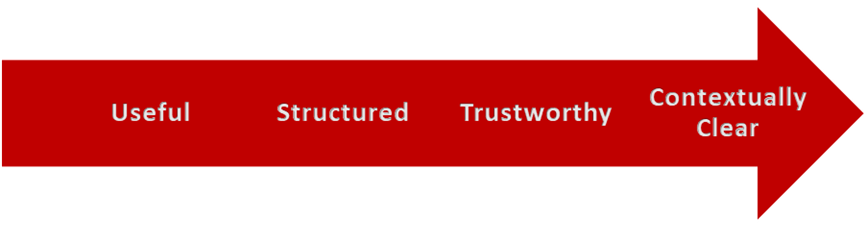
A strong marketing strategy for growth now needs to include both SEO and AI SEO principles.
Here are some of the most important factors businesses should focus on.
1. Create Content Around Real User Questions
People now interact with AI conversationally. Instead of searching with short robotic keywords, users ask complete questions.
For instance:
Previous search trend:
“Best accounting software”
Current search trend:
“Which is the best accounting software for freelance professionals who process international payments?”
Companies should adjust their content strategy accordingly. The most effective GEO content deals with the actual problems that users face, backed up by concrete examples. That is why guides, FAQs, comparative analysis, and educational blogs work so well.
2. Establish Topical Expertise
AI favors experts over generalists.
When your organization produces excellent content in a narrow niche consistently, AI associates your brand name with expert knowledge in that field.
This applies to companies like energy consultants producing content on:
- Procurement of electricity,
- VAT and the Climate Change Levy,
- Smart Meter Transitions,
- HVAC Efficiency,
- Commercial Energy Savings.
Generative Engine Optimization for your business becomes significantly more effective when brands consistently publish expertise-led content within one niche.
Websites with focused content are considered more authoritative than websites publishing broad unrelated content, thus building consistency and credibility.
3. Structure Content Clearly
AI systems analyze structured data better.
Information that is structured with:
- heading labels,
- concise descriptions,
- FAQ pages,
- schema coding,
- and proper layout
is analyzed more easily by AI programs.
Clear formatting also improves GEO search visibility because AI systems process structured information more efficiently.
4. Strengthen Trust Signals
Trust is becoming increasingly machine-readable. Factors that help establish trust from an AI standpoint include:
- backlinks,
- reviews,
- branding references,
- author credentials,
- case studies,
- and consistency.
The more your organization or brand has established itself as credible in several reliable sources, the greater the chances of being trusted by AI systems.
This is one of the key reasons why AI SEO is becoming central to long-term visibility strategies.
Which Industries Will Benefit Most from GEO?
Almost every industry will feel the impact of GEO, but some sectors are likely to benefit more quickly.
These include:
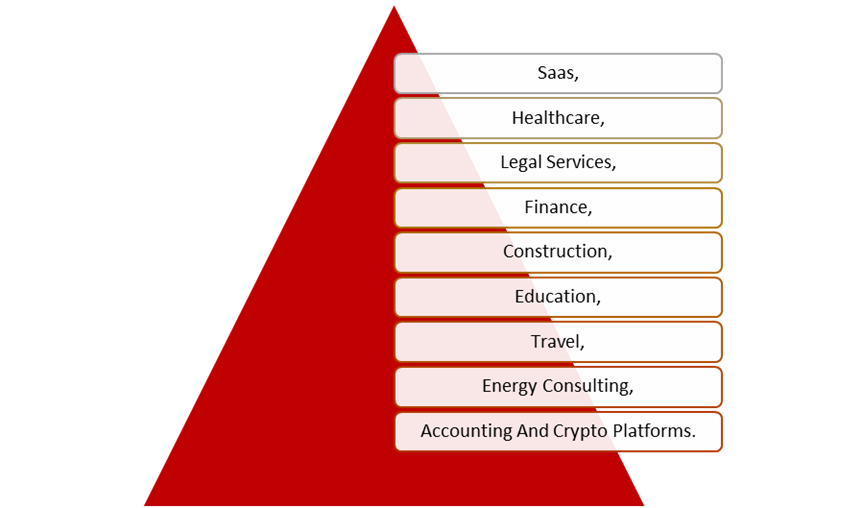
The answer lies in this very fact. Such industries rely largely on decisions based on trust. In situations where the users seek assistance from an AI system regarding financial tips, legal advice, health care knowledge, or business-related services, the AI systems tend to favor those who exhibit knowledge and expertise.
In this way, investing in knowledge-based content that can bring you educational experience through Generative Engine Optimization can definitely be worth your while.
Final Thoughts
Generative Engine Optimization is not just another marketing trend. It reflects a much larger shift in how people discover information online. Search engines are evolving into answer engines. Users increasingly expect AI platforms to simplify research, compare solutions, and recommend businesses instantly.
This way, merely ranking well on search engines won’t be enough. Companies need to think about becoming comprehensible, credible, and reputable in the eyes of the AI algorithms as well. Those who adopt the change early will have a clear competitive edge in the future.
Companies that manage to devise a long-term growth-oriented marketing strategy based on GEO would be better equipped for the future of AI-driven discovery.
As the age of AI-driven discovery is fast approaching, visibility won’t be reserved solely for those companies that rank highest. It would be granted to those that the AI can trust enough to promote them.


